Source Sequin Jacket for Parties, Events, and Fashion Shows
Explore 30 sequin jacket options with varying styles, materials, and customization services. Buyers can compare features like zipper or button closures, lining types, and seasonal suitability for adult women.
Key considerations
Products List
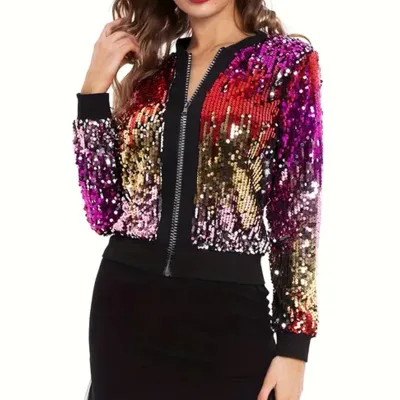


$19.00 - $19.90
Moq: 1000

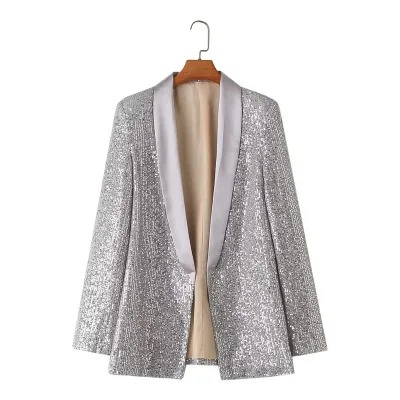

Comprehensive Sourcing Guide
Strategic Sourcing Guide for Sequin Jackets
The global market for women's sequin jackets presents a complex procurement landscape where aesthetic appeal must be balanced against rigorous supply chain reliability. Buyers researching the core keyword "sequin jacket" must navigate a product category defined by specific material compositions, intricate manufacturing techniques, and variable supply capabilities. This guide synthesizes observed market data and technical specifications to provide a disciplined framework for sourcing decisions. The focus remains on evidence-based evaluation rather than speculative claims, ensuring that procurement strategies are grounded in verifiable product attributes and supplier capabilities.
Technical Specifications and Material Composition
Understanding the technical DNA of a sequin jacket is the first step in defining procurement requirements. The product category is characterized by a distinct blend of structural and decorative elements. Observed specifications indicate that the primary fabric composition often involves Polyester, sometimes in a variant described as "Polyester with Sequin." This material choice is critical as it dictates the garment's drape, durability, and the method by which sequins are applied. The filling material is frequently identified as Polyester Wadding, providing the necessary volume and warmth suitable for the target seasons of Autumn, Spring, and Fall.
The construction techniques are equally specific. The "Beaded" technics and "Woven" weaving method suggest a labor-intensive production process where sequins are either stitched or adhered to the base fabric. The closure types vary, with Zipper and Buttons both appearing in the market data, indicating that buyers must specify their preference during the initial inquiry. The garment style is predominantly categorized as a "Blouson" or "Jacket," with a regular clothing length and a solid pattern type. While some listings mention "Lace" as a fabric type, this may refer to specific design elements rather than the entire garment structure. Buyers should verify the exact fabric composition, as some entries list "suqein" (likely a typographical variation of sequin) alongside standard Polyester, requiring clarification on the base material's quality and weight.
Compliance, Certification, and Safety Verification
In the B2B sector, compliance is not merely a formality but a prerequisite for market entry. While the provided data does not explicitly list specific certification numbers or third-party test results, the absence of such data necessitates a proactive verification strategy. Buyers must demand proof of compliance with international safety standards regarding textile chemicals, particularly given the use of metallic or plastic sequins which can contain heavy metals or phthalates.
The "Oem Service" attribute confirms that suppliers are capable of custom production, which shifts the burden of compliance verification onto the buyer. Since the products originate from Guangdong, China, a major manufacturing hub, buyers should verify that the supplier adheres to both local Chinese export regulations and the import standards of the destination country. Specific standards such as ISO 9001 for quality management or specific textile safety standards (e.g., REACH in Europe or CPSIA in the US) should be requested. The data mentions a "prod_standard" of 40405cm, which appears to be a packaging dimension rather than a regulatory standard, highlighting the need to distinguish between physical specifications and compliance certifications. Buyers should not assume compliance based on the "Breathable" or "Windproof" features listed; these are functional claims that require independent testing to validate.
Cost Drivers and Pricing Dynamics
The pricing structure for sequin jackets is influenced by a confluence of factors including material costs, labor intensity, and order volume. The observed price range in the market spans from 0.9 to 60 USD, a variance that reflects differences in quality, customization levels, and order quantities. The Minimum Order Quantity (MOQ) is a significant cost driver, with observed ranges from 1 to 2000 units, though a specific high-confidence fact notes an MOQ of 50. This suggests that while some suppliers may accept small trial orders, the standard commercial threshold is likely around 50 pieces.
The cost is heavily impacted by the "Beaded" and "Sequin" decoration processes. Unlike standard woven jackets, the application of sequins requires specialized machinery or manual labor, which increases the unit cost. The "Supply Ability" of 50,000 pieces per month indicates that high-volume orders can be accommodated, potentially lowering the per-unit cost through economies of scale. Additionally, the "Customization: Available" attribute implies that design changes, such as altering the color from the observed White, Black, or Colourful options, or modifying the closure type, will incur additional tooling or setup fees. Buyers should anticipate that the "One piece in one polybag" packaging detail adds to the logistical cost, especially if bulk packaging is not negotiated.
Typical Applications and Market Segmentation
Sequin jackets are versatile garments with applications ranging from formal evening wear to casual fashion statements. The "Leisure Jacket" pattern and "Casual Clothes" type classification suggest a dual market potential. The "Women" gender specification and "Adults" user applicability define the target demographic clearly. The "Autumn" and "Spring/Fall" seasonal attributes indicate that these jackets are transitional wear, suitable for cooler evenings or layered looks rather than extreme cold weather, despite the "Windproof" and "Breathable" features.
The "Style: Jackets" and "Item Type: Blouson" suggest a modern, slightly fitted silhouette that is popular in contemporary fashion. The "Color" options, including White, Black, and Colourful, allow for broad market coverage. The "Feature: Anti-Static" is a notable technical specification that adds value for specific applications, such as events where static electricity could be a nuisance. Buyers should consider the end-user context; a jacket marketed for a music festival may prioritize the "Colourful" and "Sequin" aspects, while a corporate event jacket might focus on the "Solid" pattern and "White" or "Black" colorways. The "Single package size" of 55X40X12 cm and a "Single gross weight" of 1.750 kg are critical for logistics planning, ensuring that the shipping cost per unit is calculated accurately based on volumetric weight.
Supplier Evaluation and Operational Capabilities
Evaluating a supplier for sequin jackets requires a deep dive into their operational capacity and logistical reliability. The "Place of Origin: Guangdong, China" and "Port of dispatch: shenzhen" provide a clear geographical context, allowing buyers to assess the proximity to major shipping hubs. The "7 days sample order lead time: Support" is a significant indicator of a supplier's agility, suggesting they can produce prototypes quickly for design validation. However, this short lead time for samples should not be confused with mass production lead times, which are not explicitly defined in the provided data but are implied to be longer given the complexity of the product.
The "Supply Ability: 50000 pieces per Month" is a robust metric that suggests the supplier has the infrastructure to handle large orders. However, buyers must verify if this capacity is consistent year-round or subject to seasonal fluctuations. The "Processing Type: Others" is a vague descriptor that requires clarification; buyers should ask for specific details on the machinery and labor force dedicated to sequin application. The "Packaging Details" of "One piece in one polybag, 20pcs in one box" indicate a standardized packing method, but buyers should confirm if this is flexible based on their retail requirements. The "Customization: Available" attribute is a strong positive signal, but it must be paired with a clear understanding of the minimum customization thresholds and associated costs.
Quality Control and Long-Term Procurement Considerations
Quality control in the sequin jacket category is paramount due to the fragility of the decorative elements. The "Beaded" technics and "Sequin" decoration are prone to shedding or detachment if not applied correctly. Buyers should implement a rigorous quality control protocol that includes checking the adhesion of sequins, the integrity of the "Polyester Wadding" filling, and the functionality of the "Zipper" or "Buttons." The "Feature: Breathable" and "Windproof" claims should be verified through physical testing rather than relying solely on supplier assertions.
For long-term procurement, the "Oem Service" capability is essential for maintaining a consistent product line. Buyers should establish a clear communication channel for design updates and quality feedback. The "Size" specifications, ranging from S, M to Free Size, require a robust size chart to minimize return rates. The "Single gross weight" of 1.750 kg and the "Single package size" of 55X40X12 cm are fixed parameters that must be factored into long-term logistics planning. Buyers should also consider the "Lead Time" for bulk orders, which may differ significantly from the 7-day sample lead time. Establishing a relationship with a supplier that can consistently meet the "50000 pieces per Month" supply ability while maintaining quality standards is crucial for scaling operations.
Summary of Key Procurement Parameters
To facilitate quick decision-making, the following table summarizes the critical parameters observed in the market data for sequin jackets. This comparison aids in aligning buyer requirements with supplier capabilities.
| Parameter | Observed Value / Range | Procurement Implication |
|---|---|---|
| Material | Polyester, Polyester with Sequin | Verify base fabric weight and sequin durability. |
| MOQ | 1-2000 (High-confidence: 50) | Negotiate based on volume; 50 is a likely baseline. |
| Lead Time (Sample) | 7 Days | Indicates high agility for prototyping. |
| Supply Ability | 50,000 pieces/month | Confirms capacity for large-scale orders. |
| Origin | Guangdong, China | Verify port of dispatch (Shenzhen) for logistics. |
| Packaging | 1 pc/polybag, 20 pcs/box | Standardized; confirm if bulk packaging is needed. |
| Season | Autumn, Spring, Spring/Fall | Plan inventory for transitional weather periods. |
| Features | Breathable, Windproof, Anti-Static | Request test reports to validate these claims. |
By adhering to these evidence-based guidelines, buyers can navigate the complexities of sourcing sequin jackets with confidence, ensuring that the final product meets both aesthetic and functional requirements while maintaining supply chain integrity.
FAQs
What materials are used for sequin jackets?
The primary materials are Polyester or Polyester with Sequin, often filled with Polyester Wadding for warmth. Some listings also mention Satin lining and Lace fabric types, though buyers should verify the exact composition before ordering.
Can I get custom sequin jackets with specific MOQs?
Customization is available for these jackets, with a high-confidence Minimum Order Quantity of 50 pieces. While some suppliers may accept orders as low as 1 unit, the standard commercial threshold for custom production is typically around 50 units.
How long does it take to get a sample order?
A sample order lead time of 7 days is supported by suppliers in this category. This rapid turnaround allows for quick design validation, though bulk production lead times may differ significantly from the sample timeline.
Which closure types are available for women sequin jackets?
Both Zipper and Buttons are observed as closure types for these jackets. Buyers must specify their preference during the inquiry, as the market data shows variability in how these garments are fastened.
What is the supply capacity for bulk orders?
Suppliers can provide a supply ability of 50,000 pieces per month for sequin jackets. This capacity supports large-scale procurement, but buyers should confirm if this volume is consistent year-round or subject to seasonal fluctuations.
Where are these sequin jackets manufactured and shipped from?
The products originate from Guangdong, China, and are dispatched from the port of Shenzhen. This location is a major manufacturing hub, allowing for efficient logistics planning when calculating shipping costs and delivery times.